






SOFTWARE GATEWAY FOR DMR
DMR AIS gateway software for Tier 2 and Tier 3 dispatch
omniGateDMR is a software gateway that connects dispatch consoles to DMR Tier 2 conventional and Tier 3 trunked radio systems over the DMR Application Interface Specification (AIS) – up to 256 talk paths, with no vocoder hardware.
Multi-vendor AIS
Standard DMR AIS v1.6, with compatibility modes for Tait, Simoco, Kenwood, Leonardo, L3Harris and more.
Tier 2 and Tier 3
Conventional and trunked DMR from one gateway.
256 talk paths
Simultaneous calls licensed from 12 up to 256, bound to the server by a software license.
Interoperability certified
Certified on the Tait DMR TN9300 system under the Tait Technology Partner Program.
The challenge
Why DMR dispatch outgrows a hardware gateway per AIS line
DMR networks connect to dispatch through the Application Interface Specification (AIS). With hardware digital radio gateways, each gateway needs its own AIS connection, so adding talk groups or console positions means adding boxes, AIS lines and maintenance.
Mixed fleets make it harder. When a network runs more than one vendor's DMR equipment, each needs its own integration, and dispatch ends up fragmented across products.
How it works
How omniGateDMR connects your consoles to DMR
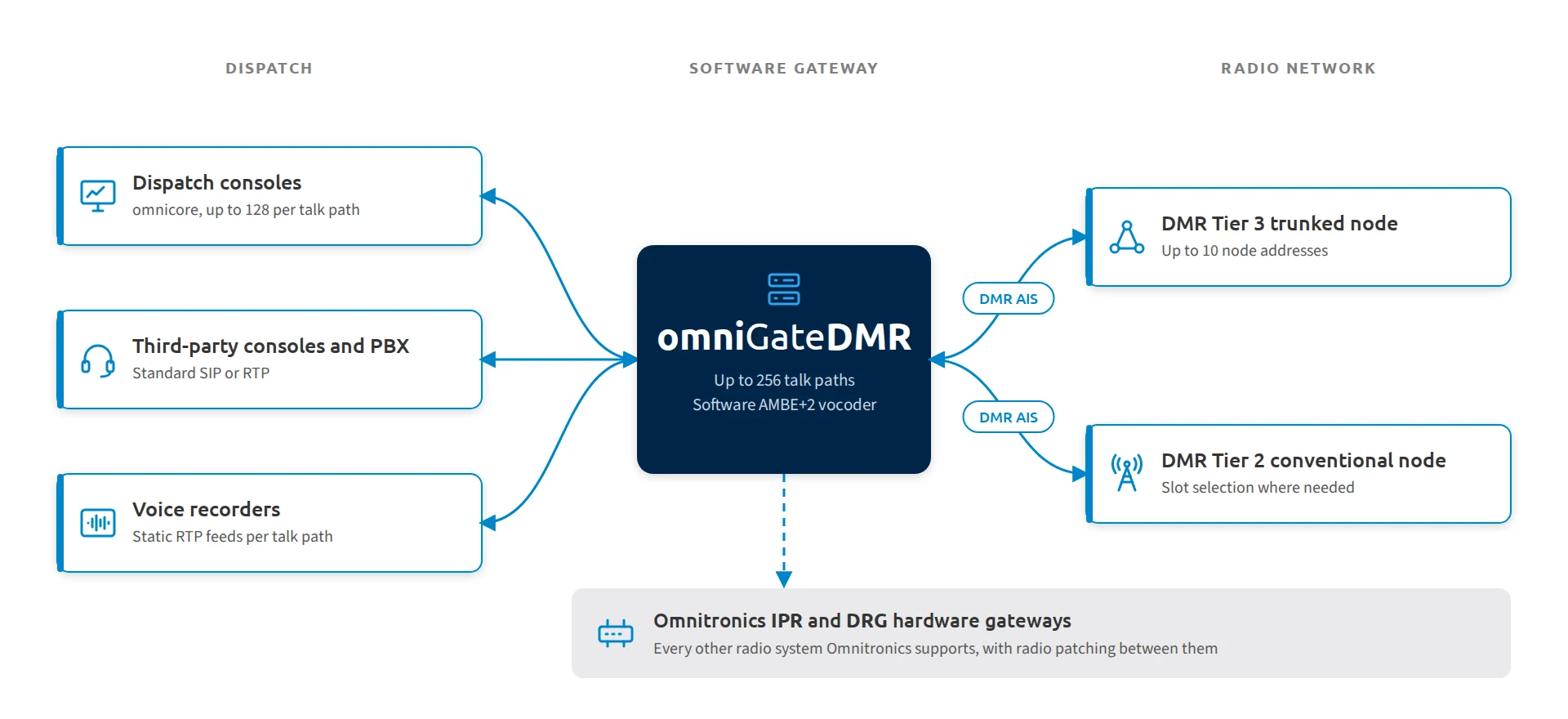
omniGateDMR registers each talk path with your DMR node over AIS and presents it to your consoles as a radio channel.
AIS to your DMR nodes
Connect over AIS to Tier 2 conventional or Tier 3 trunked systems. Up to 10 node addresses let the gateway move to the next available node automatically.
A talk path per talk group
Configure up to 256 talk paths. Every console on the same talk path shares one vocoder stream, so adding listeners doesn't add call load.
Consoles connect over SIP
omnicore consoles connect over SIP and RTP. Recorders and other gateways receive audio through up to four static connections per talk path.
What you get
One gateway for your whole DMR estate
Operators and integrators both gain one software product that covers Tier 2 and Tier 3, several radio vendors and 12 to 256 simultaneous calls, with failover built in.
For operators
- Group, individual, broadcast and All Call calls, emergency, text and status messaging, from every console.
- Radio check, stun and revive, remote monitor and, on Tier 3, dynamic regrouping.
- Radio location into omnicore and omniAGS for the console map, from DMR AIS location reports or the Tait location service.
- Priority calls from the console, with DMR priority levels 0 to 3.
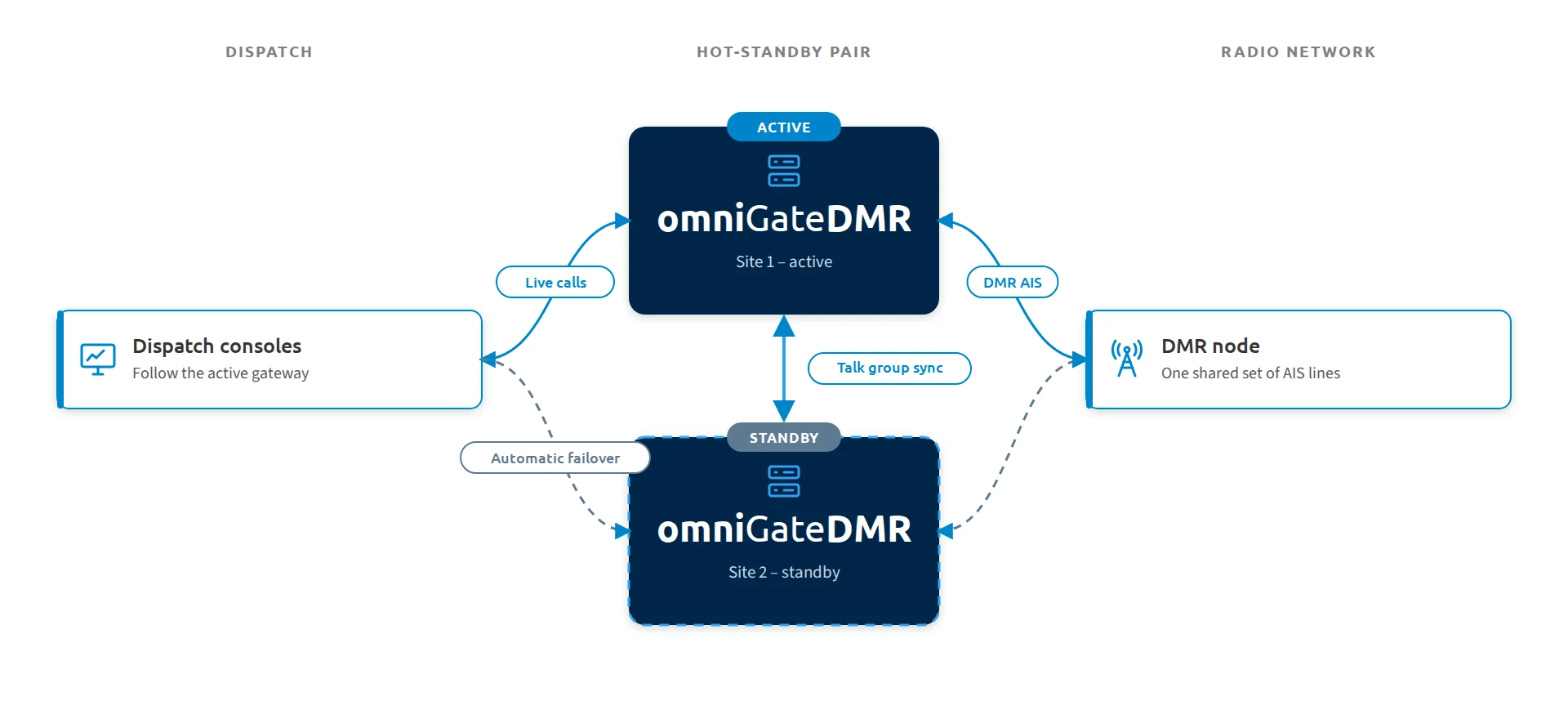
- Automatic failover to a standby gateway that shares the same AIS lines, then re-arms itself once the fault clears.
For resellers and integrators
- One product for DMR systems from Tait, Simoco, Kenwood, Leonardo, L3Harris and more – and every other radio vendor Omnitronics supports through Omnitronics IPR and DRG hardware gateways.
- Capacity is a license: quote 12 to 256 simultaneous calls without changing hardware.
- Deploys on a fan-less industrial PC, a rack server or the customer's own hypervisor.
- Browser-based configuration, SNMP with traps and backup and restore.
- Interoperability certification to point to in tenders.
Overview
What is a DMR AIS gateway?
A DMR AIS gateway connects dispatch consoles to a DMR radio network through the DMR Application Interface Specification. omniGateDMR does this in software for Tier 2 conventional and Tier 3 trunked systems, carrying up to 256 talk paths with simultaneous calls licensed to suit the site. The DMR Association explains the interface on its DMR Applications Interface (AIS) page.
Tier 2 and Tier 3 in one product
On Tier 3 trunked systems the gateway supports talk group registration, group, individual and broadcast calls, emergency, status and text messaging, radio check, stun, revive and dynamic regrouping. On Tier 2 conventional systems it adds call alert and radio enable and disable, with slot selection where the radio system needs it.
Multi-vendor compatibility
Compatibility modes cover the original DMR AIS standard, DMR AIS v1.6 and systems from Tait, Simoco, Kenwood, Leonardo, L3Harris and more, with Tier 2 slot selection where the radio system needs it. The transmit codec can be AMBE or G.711, and text messages use the format each vendor expects. Transmit and receive gain are set separately.
Resilience
Two gateways run as a hot-standby pair that shares one set of AIS lines: the standby registers only when it becomes active, then takes over calls, text and status messages. Once the original fault has cleared, failover re-arms automatically.
Every radio vendor Omnitronics supports
Because omniGateDMR also connects to Omnitronics IPR and DRG hardware gateways, it reaches the analog and digital radio systems Omnitronics supports – see the technology logos at the foot of this page. Consoles see those channels alongside the DMR talk groups, and dispatchers can patch between them.
Deployment
The gateway runs on Ubuntu Server with a software AMBE+2 vocoder and a machine-locked license, on a fan-less industrial PC, a rack server or as a virtual machine. The host processor must support AVX2, passed through to the guest.
Key facts
- Interface: DMR AIS to Tier 2 conventional and Tier 3 trunked systems
- Capacity: up to 256 talk paths; simultaneous calls licensed in packages of 12, 24, 48 and up to 256
- Compatibility: DMR AIS v1.6, and systems from Tait, Simoco, Kenwood, Leonardo, L3Harris and more
- Other radio systems: every system Omnitronics supports, through Omnitronics IPR and DRG hardware gateways
- Consoles: omnicore and third-party consoles; up to 128 console connections per talk path
- Location: Tait location service and DMR AIS location reports
- Resilience: hot-standby pair sharing AIS lines, with automatic re-arm
- Platform: Ubuntu Server, software AMBE+2 vocoder, fan-less PC, rack server or virtual machine (AVX2 required)
- Certification: Tait Technology Partner Program on the Tait DMR TN9300 system, July 2025
FAQ
omniGateDMR questions buyers ask
Does it support DMR Tier 2 and Tier 3?
Yes. omniGateDMR connects to DMR Tier 2 conventional and Tier 3 trunked systems over AIS. Choose the tier to match your radio system and the gateway publishes the matching call types and features to your dispatch consoles.
Which DMR vendors does it work with?
omniGateDMR works with DMR systems from multiple vendors. It supports standard DMR AIS v1.6 with compatibility modes for Tait, Simoco, Kenwood, Leonardo, L3Harris and more, and Omnitronics IPR and DRG hardware gateways extend it to the other radio systems Omnitronics supports. Its interoperability has been certified on the Tait DMR TN9300 system under the Tait Technology Partner Program.
How are simultaneous calls licensed?
omniGateDMR supports up to 256 talk paths, and simultaneous calls are licensed in packages of 12, 24, 48 and up to 256. The license is bound to the server, so capacity grows by license rather than by adding vocoder hardware.
Can it run on a virtual machine?
Yes. omniGateDMR runs on Ubuntu Server as a virtual machine, on a rack server or on a fan-less industrial PC. The host processor must support AVX2 and the hypervisor must pass it to the guest, because the software vocoder uses it.
What happens if the gateway fails?
Two omniGateDMR gateways run as a hot-standby pair sharing the same AIS lines. If the active gateway or its network fails, the standby registers and takes over calls and messages, and the pair re-arms automatically once the fault clears.
Related
Build out your DMR dispatch system
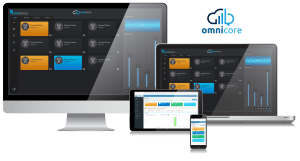
Pair omniGateDMR with omnicore Enterprise Dispatch Management System for the console side, and bring Airbus Agnet broadband users onto DMR talk groups with omniGateAIR.
Compare every option on the software RoIP gateways overview, read the interoperability certification announcement or see how Omnitronics supports power and utilities and mining operations.
Bring every DMR talk group onto one console
Tell us which DMR tier and vendor you run and how many talk groups and consoles you need, and we'll size omniGateDMR for it.
Reseller or integrator? Become an Omnitronics partner and bring it to your customers.