







Interoperability Created Between Conventional & Trunked Networks
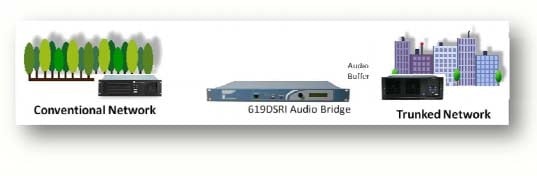
The Ontario Ministry of Natural Resources with both remote regional and city resources required collaboration between their Trunked and voted Conventional Radio Networks. By using a 619DSRI Audio Bridge / Interoperability Gateway this has been made possible.
Customer Profile
Ontario Ministry of Natural Resources | Forestry Department
Application
Conventional & Trunked
Interoperability
Products Used
619DSRI Audio Bridge / Interoperability Gateway
Business Benefits
A Simple Software Configuration Best Fit for Connecting Networks
Connecting Radio Networks
Cost Effective
Simple Software Configuration
Easily Expandable
The Challenge
The challenge was to provide interoperability between the department’s Conventional rural network with the Trunked urban networks.
The Solution
To Cross‐Band Both the Conventional and Trunked Networks
By using 619DSRI Audio Bridges / Interoperability Gateways, the department was able to cross‐band both the Conventional and Trunked networks. Users send a DTMF signal to the bridge which changed the bridge into a new audio bridging format. All users now have audio connectivity between the Trunking and conventional systems without the need for any additional signaling. To restore to default operations a different DTMF signal is sent to the 619DSRI. Up to 8 bridging formats can be configured using the DTMF methodology. Trunked networks require time to establish a connection as they search for a free channel talk path. If a conventional user tries to talk to the Trunking network whilst the call is being established, the first syllables of speech will be lost. The 619DSRI has an inbuilt audio delay buffer so the conventional PTT initiates the Trunking setup, then the 619DSRI sends the speech. This means no speech is lost when conventional users connect to Trunking users.
Product Focus
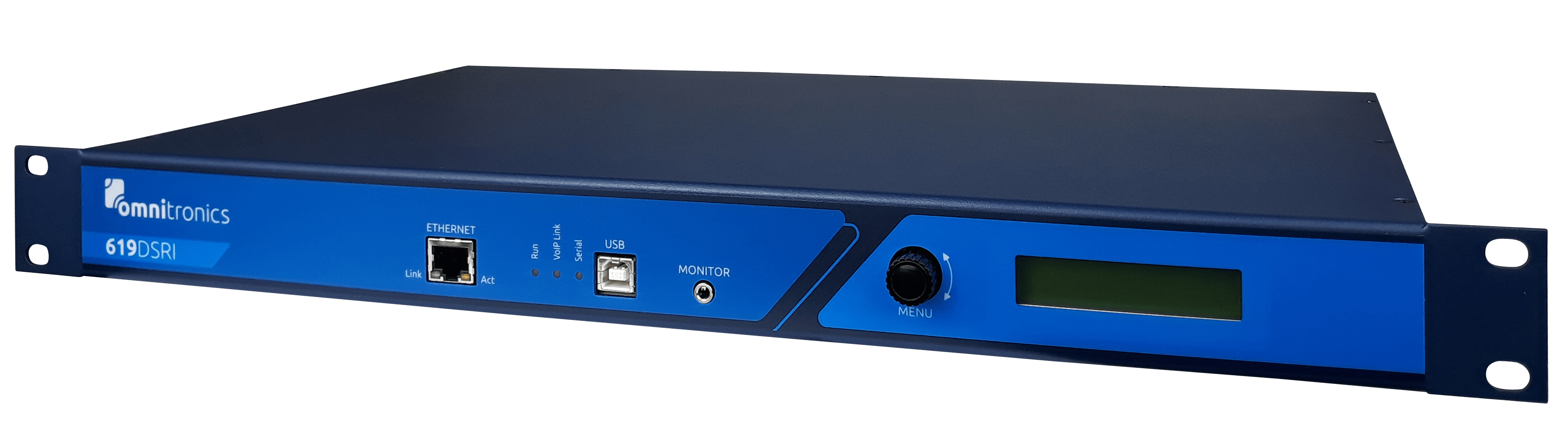
619DSRI Audio Bridge / Interoperability Gateway
Easy to Use
Smart, flexible & dynamic
Convenient
Rack Unit
Supported Signalling
CTCSS or tone signalling
Features
Cross-banding, group config & more
Conclusion
Increase Interoperability Across Networks in a Very Cost Effective Manner
This example shows yet another layer of how Audio Bridges can increase interoperability across networks in a very cost effective manner. This means that organizations such as forestry have the flexibility to choose the best fit radio equipment for each area, yet still communicate across the entire network. Thanks to Argosy Communications for integrating this solution.
Case Studies
Similar Success Stories

Going Deeper with RoIP Networks
Overview Going Deeper with RoIP NetworksTransitioning to Radio over IP (RoIP) offers some tremendous benefits to organizations that rely...

Omnitronics’ 35th Anniversary: Established, Trusted and Quality Driven
Omnitronics’ 35th Anniversary: Established, Trusted and Quality DrivenOmnitronics has grown since it was first established 35 years ago....

An Overview of VoIP for Radio Networks
An Overview of VoIP for Radio NetworksPublic safety is of critical importance to many fleet mobile operators. As such, the convergence of...

DRG in Analog Mode
DRG Analog ModeIn our efforts to create the most effective digital radio dispatch solutions, we at Omnitronics regularly assess our...

Why Use a Gateway for Digital Radios?
Decision Why Use a Gateway for Digital Radios?The decision to move to digital radio can be made for a number of reasons, but it's likely...

Surf Life Saving Australia and Omnitronics Partner to meet Modern Radio Communication Demands
Surf Life Saving Australia and Omnitronics Partner to Meet Modern Radio Communication DemandsAustralia is a country known for its coastal...

Audio Bridging: What It Is, Why You Need It
Audio Bridging: What it is, Why you Need itOver the years, your personnel have likely acquired a collection of radio technologies, some of...

Interagency Cooperation for Public Safety Agencies